
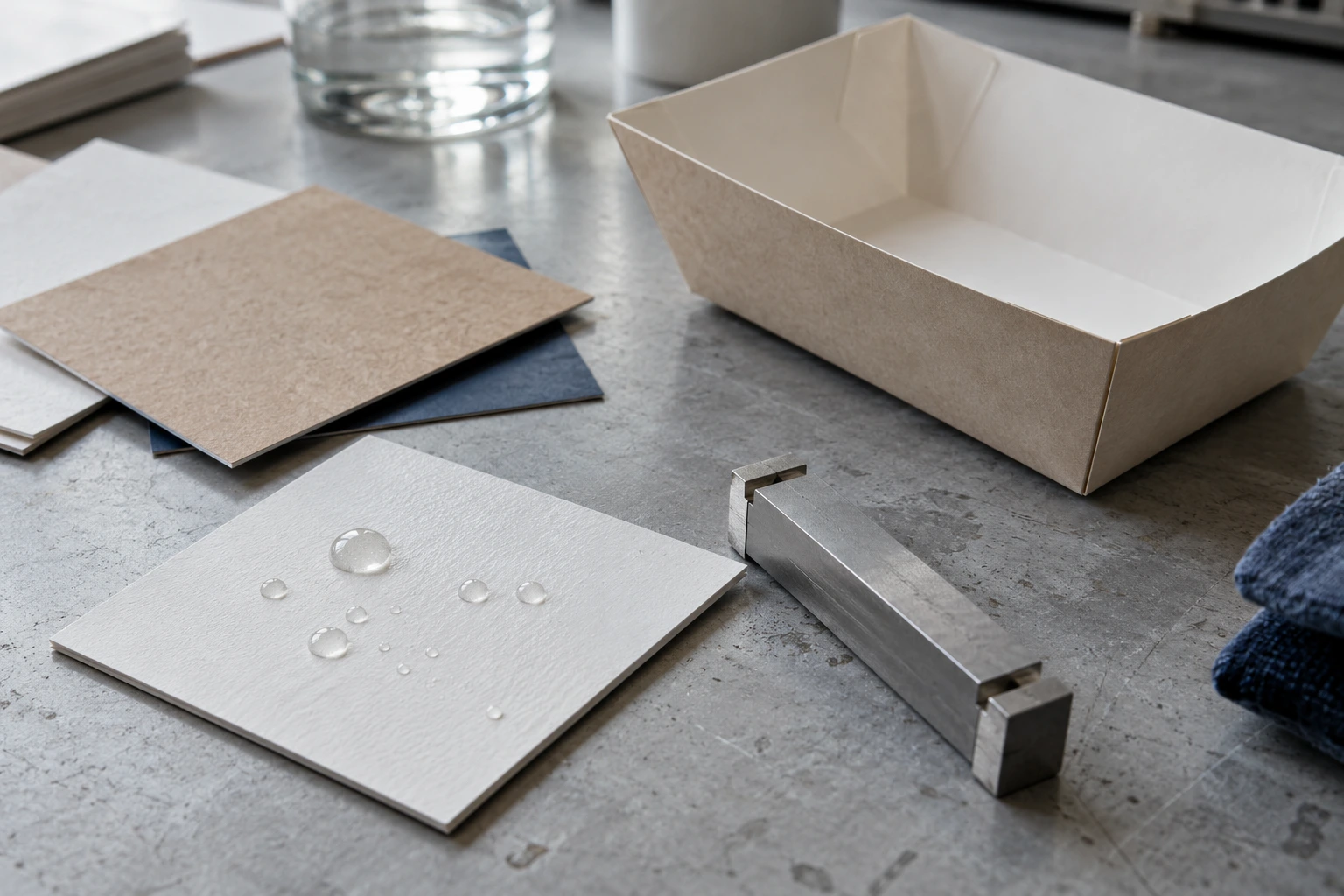
Define the Barrier Function
Is the aim resistance to liquid water, fats and oils, or reduced water-vapour transmission? These are different properties, and testing one does not establish the others. Choose an assessment relevant to the contents, duration of use and storage conditions.
Heat Sealing Needs Its Own Assessment
For a sealed pack, identify the two mating surfaces, heating method, pressure and contact time. A barrier coating is not necessarily heat-sealable, and success with one heating method does not validate another. Match the grade to the packaging construction and equipment.
Review Paper, Application and Drying
Paper absorption, application uniformity and drying affect the result. Distinguish wet coating application from dry coat weight: they are not the same value. Set drying conditions and application amount using the technical data sheet and trials on the actual paper.
Evaluate the Converted Pack
Inspect folds, cut edges and seals after converting, then evaluate with the intended contents, temperature and duration of use. A water-drop observation can support initial screening, but cannot replace barrier, seal and food-contact assessment for the finished application.